Category Archives: Appetizers

Quick Low Carb Snacking Options

We’re into football season and baseball is wrapping up with the World Series, so we’re often thinking about a Sunday afternoon get-together with friends and delicious snack foods.  They just naturally go together, right?

Well, it’s not the best thing for a low carb lifestyle unless those snacks are low in carbs.  You can always put out a meat and cheese tray and a vegetable dish, but there are some quick put-together recipes that make great snacks.

Here’s a few that are already on this blog and a new one for Little Smokies Wrapped in Blankets is just below on this page.  I’m sure you’ll find a couple of good choices for your television watching.

For a delicious do-ahead snack, you can’t beat deviled eggs and this is my recipe for Texas Style Deviled Eggs.    Another easy one is Bacon Wrapped Water Chestnuts and these are so good you’ll want plenty of them.  Ham and Pepper Madeleine Cakes are also a tasty snack and are great dipped in Chipotle Ranch dressing.

Little Smokies Wrapped in Blankets

This is a standard appetizer that normally uses crescent rolls and are easy to make. I’ve adjusted the recipe to a low carb option. For this, I use CarbQuick, but any low carb baking mix will work. I don’t know how well almond flour would hold together and I haven’t tried it. It uses Little Smokies or any other cocktail wiener. As another option, you could take premade cocktail meatballs, cut them in half and wrap those. For a vegetable version, try wrapping a 2-inch piece of asparagus or broccoli stems or kohlrabi cut into 1/4×2-inch sticks with the dough.

1/2 cup Low Carb Baking Mix
1/4 teaspoon Garlic Powder
Pinch of Salt
1 tablespoon Butter or Shortening
1 teaspoon of Buttermilk or Cream
1 tablespoon very cold Water
2 tablespoons Cheddar Cheese, finely shredded
Butter flavored Cooking Spray
15 Little Smokies or (8) Meatballs or (15) Vegetable sticks

In a small bowl, add the flour, garlic, salt, and butter or shortening. Cut together with a fork until the mixture turns to crumbles. Add the buttermilk and water and mix together until it begins to pull together. If it isn’t moist enough, add just a little bit more water until it forms a ball. Wrap in plastic wrap and refrigerate at least one hour.

Preheat oven to 375 degrees (F.) Prepare a baking sheet by spraying with baking spray or put a silicone mat on it and spray the mat.

Pinch off enough dough to make a one-inch ball and hand press it to a 2×1/2-inch strip. I use a sheet of wax paper to press this on. Place the smokie in the middle and press the dough around it to form a wrap over it. Press together to seal. If the dough breaks, simply press it back together. Repeat for each little sausage. For the meatballs, cut the meatball in half and roll each half in the dough.

Place on baking sheet, then spray the tops with the baking spray and bake for 18 to 20 minutes until golden brown.

Serve with a mustard and mayonnaise sauce. My preference is a cranberry mustard and mayonnaise. Or you can eat them as they are. These are usually a hit at a party.

Makes about 15 appetizers.

Nutrition Information per appetizer (Little Smokies):
Calories: 49 Fat: 1.7 g Net Carbs: 0.5 g Protein: 2.1 g

Nutrition Information per appetizer (Meatballs – 6 to serving):
Calories: 52 Fat: 3.6 g Net Carbs: 1.5 g Protein: 3.2 g

Nutrition Information per appetizer (Kohlrabi- 1/4×2-inch strips):
Calories: 22 Fat: 1.7 g Net Carbs: 0.4 g Protein: 0.9 g

Tip:  To get a lower carb count on the meatballs, make your own.  Most of the ones you buy pre-made have a bread crumb filler in them.  Make one-inch meatballs and bake them until they are just done. Cool, cut in half and wrap.  This will bring the carbs down to about a half carb each.

Texas Style in Deviled Eggs

Texas Deviled Eggs - Skinny Girl Bistro

My grandmother, a third-generation Texan, and my mother made the best deviled eggs I’ve ever had. When I moved away from home, I discovered not everyone made their deviled eggs the same way. Then I found that PK’s mother was from East Texas and made her eggs almost the same way, but didn’t include bacon. For this reason, I’ve dubbed these Texas Deviled Eggs since the sweet deviled egg seems to come from that part of the country. When I take them to parties, people usually want the recipe.

Eggs are great on a low carb lifestyle because they are so low in carbs and it takes your body a long time to digest them, which keeps you satisfied for a while. These deviled eggs are wonderful to take on picnics or to 4th of July parties or other summer occasions. Just be sure to keep them in the cooler (with ice) until you’re ready to eat.

I’ve adapted these ever so slightly for low carb, mainly using sugar-free sweet pickle relish or sugar-free sweet pickles in them. If you can’t find the relish, look for the sugar-free sweet pickles and chop them finely in a chopper or food processor.

Texas Deviled Eggs

7 hard-boiled eggs, peeled (See Tip)
2 to 3 tablespoons mayonnaise
1 teaspoon mustard (or more to taste)
1 1/2 tablespoons sweet pickle relish (sugar-free)
3 pieces of bacon, fried and broken into pieces or use Hormel bacon pieces
1/2 teaspoon salt
1/4 teaspoon pepper
Paprika to sprinkle on the tops

Cut 6 eggs in half and scoop the yolk into a bowl. Set the whites on a plate to be filled later.  Cut up the last egg and add to the bowl. This will be the filling and the extra egg ensures a mound of filling on each half. Mash the filling with a fork until it is completely crushed and mixed together. Add the mayonnaise, mustard and pickle relish. Be sure to get the juice in it. Mix together, then stir in the bacon bits.  If the mixture is too dry, add a little more mayonnaise.  Add salt and pepper and mix it in.

Put a mound of filling in the center of each egg white half so that it completely fills it and spreads over the top. It may help to use your spoon to make four even sections of the filling, then use 1/3 of each section to fill the egg whites. Sprinkle paprika over the top for a light dusting of red, then place on serving plate, cover with plastic wrap and put in the refrigerator until ready to serve.

Makes 1 dozen egg halves. Serves six – 2 egg halves per serving

Nutrition Info per serving
     Calories: 133.5 Fat:10.5 g Net Carbs: 0.5 g Protein: 8.2 g

Tip:  Getting decent-looking eggs after boiling is sometimes a challenge.  There is some truth to not using really fresh eggs for this.  I try to plan ahead to allow at least a week for the eggs to sit in the refrigerator.  This makes it easier for the membrane to separate from the egg.  I put cold eggs in a pan of cold water to cover, then put on the heat and bring to a boil over medium-high heat.  Turn down and cook another 5 minutes, then turn the water off.  Let the eggs sit another 5 to 10 minutes, then run cold water over the eggs.  You can add ice to help chill them quicker.  Break the egg shells in several places and carefully peel part of the shell away and lift the membrane away from the egg if it doesn’t come free with the shell.  Put the egg back in the cold water, then peel the rest of the egg while trying to pull the membrane away from the egg gently.  If this is too much work for you, purchase pre-peeled eggs at the grocery store. They cost almost double but are worth it if you’re in a hurry.

Guilt-Free Chicken Tenders

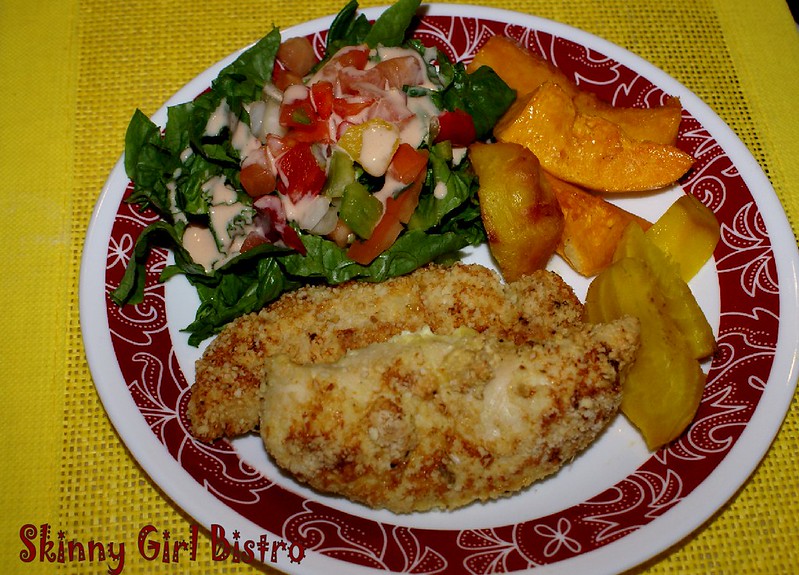
For everyone who loves chicken tenders, like me, but can’t have all the carbs in traditional breading, this is an alternate version I came up with based on the Betty Crocker recipe. It’s easy, not fried and uses low carb almond flour for the breading.  They taste wonderful, although not like a breaded one or an over-breaded one, in some cases.  The chicken is juicy and the flavor comes through beautifully.  This recipe makes 2 large servings or 3 to 4 smaller ones.  I found two of the tenders with the vegetables to be a very filling meal, but a  bigger appetite would probably want at least three of these.

Oven Baked Chicken Tenders

2 tablespoons low carb Flour (any fine mill type)*
1 Egg
1 tablespoon Water
1/2 cup Almond Flour or Ground Almonds
1/4 cup grated Parmesan cheese
1/2 lb Chicken Breast Tenders

Favorite dipping sauce, if desired

* Carbolose, CarbQuick, coconut flour, Bob’s Red Mill Baking Mix, LC Foods or any others.  You could possibly even use almond flour for the initial dredge as well as the final one. 

Preheat the oven to 425 degrees (F.) Prepare a baking pan with a piece of aluminum foil sprayed with baking spray.

Rinse the chicken tenders and dry with a paper towel. In a small bowl or saucer, put the low carb flour. In a small bowl, add the egg and water and beat until frothy. In another shallow bowl, add the almond flour, Parmesan cheese, salt, pepper and a garlic powder.

Lightly dredge a chicken tender through the plain flour, then dip in the egg mixture, then coat it on both sides in the almond flour. Put on the prepared baking pan. Repeat with the remaining chicken tenders. You should have about eight of them. Spray the top with butter-flavored cooking spray.

Bake for about 40 to 50 minutes until golden brown and no cloudy juices run out. Let sit a few minutes, then serve. Wonderful side dishes with it are roasted golden beets and butternut squash, as pictured, or celery root or kohlrabi fries or creamed cauliflower. A salad is a colorful additional also.

You can serve with a low carb ranch dressing or chipotle dressing or the honey mustard dressing below.

Makes 4 servings or 2 large servings.

Nutrition Info for 1 servings (based on 2)
Calories: 257 Fat: 11.7 g  Net Carbs: 2.3 g Protein: 35.3 g

Honey Mustard Dressing

1 teaspoon sugar-free Honey
1 tablespoon Dijon Mustard
3 tablespoons Mayonnaise

Mix all ingredients in a small bowl until completely blended. No carbs in this recipe!

Tip: If you can’t find sugar free honey – it can be ordered online at Netrition.com- then regular honey can be used. It will add 2.9 g of carbs to each serving.

If you try this recipe, please let me know how you like it or post any questions or suggestions you might have.

Wade into Water Chestnuts

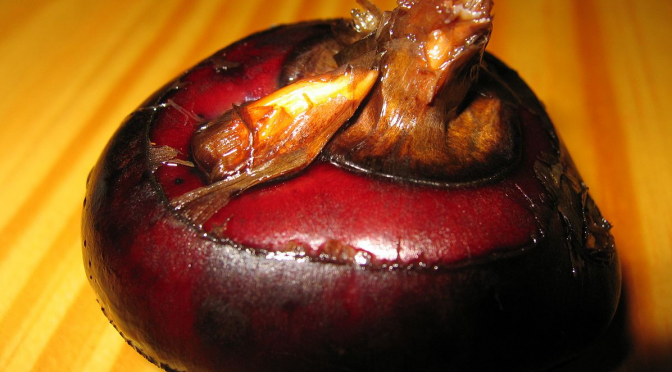
Quite literally. It’s called a water chestnut because that’s where this vegetable is grown — in a watery bed. In fact, it is often a rotating crop in rice paddy fields in many Asian countries and Australia, particularly because it is a popular ingredient in Asian cuisine. It has been cultivated in China since ancient times. Most likely, you’ve tasted it if you noticed a crunchy tan-looking nut thing in your Chinese food. It’s used in many recipes for the crunch and mild, fresh taste so it blends well with the other flavors.

The water chestnut isn’t actually a nut, but the root corm of a marsh grass in the sedge family. When they are fresh, they do resemble the actual tree-grown chestnuts and have what is described as a “mildly sweet apple-coconut flavor”.  Most of us obtain our water chestnuts from cans and some of this flavor has dissipated.

Like jicama, water chestnuts don’t get soft when they’re cooked, so they maintain that crisp crunch that works so well with stir-fried recipes. I love them in my broccoli beef or chicken stir-fries, but there are other ways to use them. The are a key ingredient in a Thai dessert dish called Rubies in Coconut Milk and in a Water Chestnut Cake that uses water chestnut flour, also called singoda flour. While I’d love to try this, the flour is entirely too high in carbohydrates to be effective in my meal plan, but if you’d like to give it a try, you can order it on-line from Amazon. Fortunately, I use the canned water chestnuts sparingly and a little goes a long way in a recipe.

Nutrition information for Water Chestnut 1/2 cup (62 grams)
Calories: 60 Fat: 0.0 Net Carbs: 13.0 g Protein: 1.0 g

Recipes:

Here are a couple of recipes from Skinny Girl that use water chestnuts:

Egg Foo Yung
Teriyaki Stuffed Mushrooms

My featured recipe is this simple to make and delicious appetizer. How can you go wrong with bacon and water chestnuts? The only caution is to not eat too many of them!

Bacon Wrapped Water Chestnuts

Bacon Wrapped Water Chestnuts

8 fresh Water Chestnuts
3 tablespoon Soy Sauce
2 tablespoons Brown Sugar Substitute
4 slices regular Bacon, cut in half
8 Toothpicks, use sturdy ones

Use warm water to rinse and drain the water chestnuts.

Put the soy sauce into a shallow dish and add the water chestnuts. Cover with plastic wrap and let marinate in the refrigerator for about 3 hours.

When ready to cook, preheat the oven to 350 degrees (F.)

Put brown sugar substitute on a saucer. Roll each water chestnut in the brown sugar, then wrap 1/2 slice of bacon around it and secure with a toothpick.  Roll each appetizer in the brown sugar mixture.

Put the wrapped chestnuts on a rack in a baking pan, then bake for 15 minutes, turn them over, then bake another 15 minutes, Baking them allows the bacon to cook thoroughly.

Makes 8 appetizers.

Nutrition Info per appetizer
Calories: 41.7 Fat: 2.8 g Net Carbs: 1.1 g Protein: 2.4 g

Tip: You can make these appetizers ahead of time and freeze until you are ready to cook them. Place them in a freezer bag and freeze for up to 3 months.

Information for this article was taken from Food Facts, Wikipedia,  About Food

Top photo is from Wikimedia Commons and is used with permission – “Wasserkastanie 2”. Licensed under Public Domain via Wikimedia Commons

Join In on Jicama

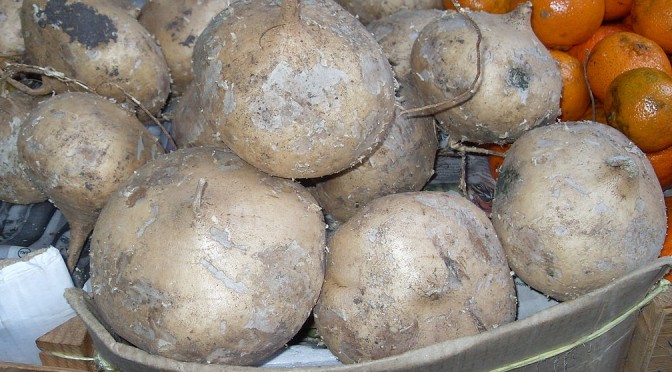
Oddly, even though I grew up adjacent to Mexico and thrived on Mexican food, jicama was something I really didn’t encounter. Not even when I moved to Southern California.  I didn’t “discover” it until about ten years ago when I spotted the odd-looking root in the grocery and decided to try it. What I found was an unusual vegetable that has a crisp, clean flavor and a bit of sweetness. It reminded me of an apple in texture and in crunch.

Most frequently, jicama seems to be cut into small sticks or grated and put into salads and slaws, where it does an admirable job. It can also be cooked, baked, boiled or fried. One of the interesting characteristics is that it doesn’t get soft. It keeps the crispness, which makes it great for a dipping chip, even if you fry it. It adds a bit of crunch to a stew while substituting for a higher carb’d vegetable.

Cultivated South of the Border

Pronounced hee-ca-ma, it is also called yambean, although it is not a yam. Jicama is native to Mexico and South America. It is part of the legume family and grows a vine in tropical and semi-tropical climates. The edible jicama root is a globular shape and has been referred to as Mexican turnip, although the flavor is nothing like a turnip, or Mexican water chestnut, which it resembles in crunch. Other names for it are bengkoang, sengkwang and yacon. The flavor suggest that it would also be good in Asian food as a water chestnut substitute. It is grown in Asia and in other tropical and semi-tropical areas, including Florida, Hawaii and Puerto Rico.

Nutrition Info per 100g (about3.5 oz)
Calories: 38 Fat: 0.19 g Net Carbs: 3.8 g Protein: 0.72 g

Jicama, how do I love thee?

Let me count the ways:

  • Peeled and cut into sticks as a snack.
  • Cut into rounds and fried as a dipper instead of potato chips.
  • Chopped and added to stir-fry.
  • Shredded and added to salad.
  • Cut into sticks and Tampura battered and fried.
  • Sliced and spread with peanut butter and sugar free jam.
  • Sliced and sprinkled with cinnamon and sugar substitute.
  • Sliced and roasted, then topped with cheese and bacon.
  • Sliced and sprinkled with lime juice and a bit of chili powder.
  • Cut into cubes and mixed with strawberries and blueberries in a fruit salad.
  • Or mixed with cantaloupe and honeydew melon in a fruit salad.

There are more ways than I can count to use this versatile vegetable.   If you have other ways you’d like to share, let me know.

Here are two ways to use jicama from this site:

Root Vegetable Fries (on the Celeraic page, go to the bottom)
Sizzlin’ Hot Snacks (toward the bottom, snack options with  beets, daikon and jicama)

And here’s a new recipe for jicama for this entry:

Cinnamon Battered Jicama Sticks

12 Jicama sticks, about 3 to 4” long, 1/2 inch cubed
1/4 cup Low Carb Flour
1 Egg
1/4 teaspoon Baking Powder
1 teaspoon ground Cinnamon
1/2 teaspoon ground Cardamom
2 tablespoons Sugar Substitute
1/4 cup sugar free Raspberry Jam or preferred flavor
Coconut Oil

Mix the flour, egg, baking powder, sugar substitute and spices together to make a batter.

Heat enough coconut oil in a small pan to bring it to about 1/2 inch. Reduce to a medium heat.

Dip a jicama sticks into the batter, then carefully slide into the pan of oil. Cook about three at a time until golden brown, then turn over to cook the other side to golden brown or spoon the oil over the top while cooking to brown the top. This only takes a couple of minutes. Remove to paper towels to drain. Spread with sugar free raspberry or other jam of choice.

Makes 12 snacks.

Nutrition info per snack
   Calories:16 Fat: 0.7 g Net Carbs: 2.0 g Protein: 0.8 g

All comments relevant to my posts are welcome. SPAM is not.  If the post has nothing to do with my site content, it will not be posted.

This article used the following for reference: Specialty Produce, Nutrition and You,  Natural Society Newsletter

Top photo from WikiCommons, used with permission – By Wicki (Own work) [Public domain], via Wikimedia Commons