Category Archives: Recipes

Bountiful Beets

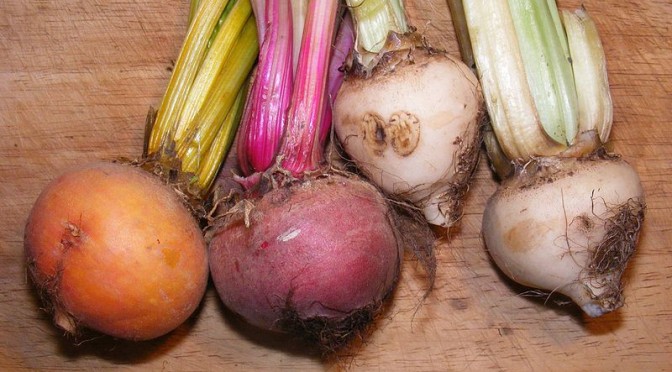
When I used to think of beets, I thught of the red canned ones that we added in little strips to salads or to make into Harvard Beets for the holidays. Then I discovered the taste of freshly cooked beets.  There are so many other uses and other types of beets that can make this vegetable a real star in your meals.

Like many of our foods, beets originated in the Mediterranean region and North Africa and were cultivated by ancient Greeks and Romans. Originally, they were grown primarily for their leaves, which can be chopped and cooked into greens or eaten raw. It wasn’t until the 14th century that eating the bulbous root became common. By then the root had developed from a thin, parsnip-like shape into the rounded vegetable we now know.

When it comes to the taste of the beet, it is a “like it or not” personal preference. The beet has an earthy taste that comes from geosmin, a substance that also yields a sweet spring scent when it rains. This is more prominent in the red beet while the golden beet has a much milder taste. As with eating most vegetables, the freshly prepared vegetable usually tastes better than a canned version.

Other uses for beets have included beet sugar, a beet alcohol and red natural dye. As soon as you cut a red beet, it will immediately begin bleeding a red juice that can stain your hands, any material near it and anything else that comes in contact with it. A picked eggs recipe uses the water that red beets are cooked in to dye hard boiled eggs red. This recipe from All Recipes uses canned beets, but could be made with freshly cooked beets. For low carb, be sure to use a sugar substitute in place of the sugar.

I didn’t use to be much of a beet fan, but as I grew older and tried Harvard beets, I discovered the flavor was better than I remembered it.  Incidentally, I once red that people’s taste buds change every seven years and I have seen a steady growth in the number of foods that I now enjoy that I didn’t use to like, so maybe there’s some truth to it.  Once I tried fresh beets, I became a real fan. I just recently found Chiogga beets at my grocery store for the first time and picked up a few. These are small red and white beets with circular rings of each color inside.

Here are a couple of recipes from this site that use beets in their preparation. They can be used in surprising ways.

Amazing Chocolate Beet Cake 
Short Ribs with Root Vegetables

Nutrition Information for 1 cup beets
   Calories: 59 Fat: 0.2 Net Carbs: 9.2 g Protein: 2.2 g

Want to know about the health benefits of beets? Visit The World’s Healithest Foods.

References for this article include The History Kitchen,  Love Beetroot.co.uk, Aggie Horticulture and The World’s Healthiest Foods

Top Photo used with authorization from Wikipedia: By Beet man (Own work) [CC BY-SA 3.0 (http://creativecommons.org/licenses/by-sa/3.0)], via Wikimedia Commons

Awesome Artichokes – an Ancient and Strange Vegetable

I grew up eating artichokes,. In my house, as in many houses, the only way to eat them was to boil or steam the artichoke, peel off the cooked leaves one by one and dip them in either mayonnaise or a small bowl of melted butter with lemon. Delicious. Then when you got to the heart, you just savored the creamy, richness of it.  But there are many recipes that use artichokes and I will be exploring more of these over the next year.

What is an artichoke anyway? Where did it come from and who on earth decided to eat this thorny-looking plant? Well, we can blame the Romans and the Greeks and just about anyone else in the Mediterranean area. In Rome, a variant of the vegetable called a cardoon was native to the area and widely enjoyed by the people in the region. While the plant was originally a wild species, the Greeks were cultivating it in the Classical period. By the 9th century, globe artichokes were grown around Naples. The vegetable spread across Europe and in the 14th century, the Dutch introduced it to the English court. It was grown in Henry VIII’s garden at Newhall. But it wasn’t until the 19th century that the artichoke arrived in America, traveling with the French to the New Orleans area and the Spanish to California.

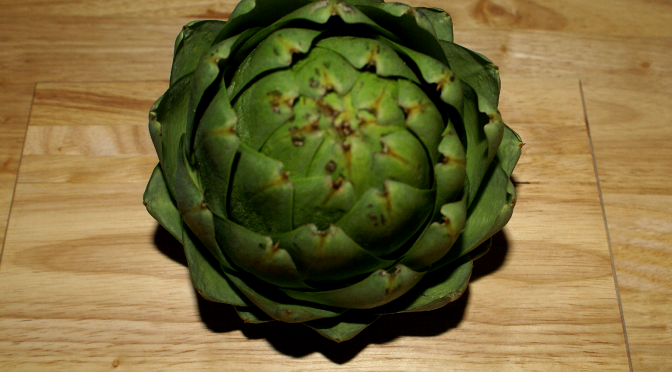
The artichoke itself is a fierce-looking vegetable with a globe shape that can grow several inches in length. Each of its triangular leaves wrap around the heart or the center bottom of the vegetable and they are tipped with a sharp point. It also produces a beautiful purple flower, which makes it attractive in an ornamental garden.

When it comes to eating an artichoke, here are the key things to remember.

• Most of the vegetable is edible.
• You need to trim off the spiky points before cooking.
• The lower part of the leaf is the meaty part and is best scraped off with your teeth.
• Savor the tender leaves at the center that are covering the choke.
• Don’t eat the choke. It’s the fuzzy center of newly developing leaves and it pretty much will choke you if you try to swallow it.
• Do eat that lovely lump under the choke, which is the heart and is the real prize of the artichoke.
• Part of the stem is also edible so long as it is tender.

Preparing the Basic Boiled Artichoke

This is the method that both my family and PK’s family used.  It is very much like the Romans prepared it long ago.

To prepare to cook the artichoke, begin by placing it on its side on a cutting board and use a sharp knife to cut across the top quarter of so of the leaves to make a flat top. Then use kitchen shears to trim the rest of the leaves down about ¼ of the way to remove the spikes and the tough part of the leaf.

The simplest way to cook an artichoke is to put on a pan of water big enough to submerge the whole artichoke. Bring the water to a boil then add a tablespoon of vinegar to the water, a little lemon and a teaspoon or more of garlic. Put the artichoke into the water with the stem bottom down in the pan. They may float to the top, so push them down and turn them often while cooking. Boil until a fork inserted in the bottom goes in and the leaves pull off easily.

Remove the artichoke and drain it in a colander, then prepare your dipping sauce. The basic one is mayonnaise, plain or with a little lemon. I added a bit of cayenne pepper the other night. You can also melt about 3 tablespoons of butter and add a ½ teaspoon of lemon juice to have a wonderful sauce. Or you can just pour some Ranch Dressing in a small bowl and dip the leaves in that. Many options work, so experiment around.

Artichokes are easy to share as an appetizer as two or three people can easily pull leaves and dip. When you reach the choke, use a spoon and a knife to cut under it and remove it. Then slice the heart into pieces and enjoy.

Nutritionally-speaking, the artichoke is good news for a low carb lifestyle and it is so good for your health.

Nutrition Info for one medium artichoke (about 3 “height from the base)
   Calories: 60.2 Fat: 0.2 g Net Carbs: 6.2 g Protein: 4.2 g

Artichoke Trivia

Here are few interesting bits about the artichoke.

• In 2012, Worldwide production yielded 1,634,219 artichokes.
• The top production of artichokes was in Egypt with 387,304.
• The United State is ninth on the list of top growers with 51,300, but almost all of the US commercial crop is grown in California.
• Castroville, California is the self-proclaimed “Artichoke Center of the World” with over three-quarters of the artichokes grown in the U.S. coming from there.

References for this article include: Wikipedia, California Artichoke Advisory Board, and Oceanmist.com

Tasty Low Carb Hazelnut Chocolate Energy Bite

Inspired by a recipe from Stevia, this quick-to-make energy bite is a tasty fat bomb.  I made a few adjustments to make it  a little sweeter and not as grainy-tasting.    Most of the ingredients are easy to find at your grocery store.  If you can’t find hazelnut flour, then use hazelnuts and grind them in your food processor until they are the consistency of flour.

Chocolate Hazelnut Quick Bites

Filling:
1 cup Hazelnut Flour
1/4 teaspoon Salt
1/4 cup Golden Flax Meal
1/2 teaspoon Cardamom
1/2 cup Butter
1 teaspoons Sugar Free Hazelnut Syrup
1 tablespoon Sugar Substitute

Chocolate Coating:
8 tablespoons Coconut Oil
1/4 cup unsweetened Cocoa Powder
1/4 to 1/3 cup Sugar Substitute

Mix the flour, flax meal, 1 tablespoon sugar substitute and salt together in a food processor, then add the butter and hazelnut syrup, pulsing until they are well blended.   Scoop up about one tablespoon of the dough and roll into a ball about 1 inch in diameter.  Set on a wax paper covered plate.  Repeat until all the dough has been made into balls.  You should have one dozen.  Put the balls into the refrigerator to chill until they are hard.    Allow 45 minutes to an hour.

To coat, mix the cocoa powder and 1/4 cup sugar substitute in a bowl and add the coconut oil. Stir until completely mixed and syrupy. If it is too thick, add a little more coconut oil.  Taste it!  If it is too bitter for you, then add additional sugar.

Prepare a plate with parchment paper or waxed paper. Remove a few balls at a time from the refrigerator and drop one at a time into the chocolate coating mix. Roll the ball around with a fork, then slide the fork under it to lift it from the chocolate and place onto the plate. Repeat with each of the balls until they are all done. Return to the refrigerator to harden the coating. Store in the refrigerator until ready to eat.

Makes 12 Balls

Nutrition Info per candy:
Calories: 170 Fat: 17.5 g Net Carbs: 1.3 g Protein: 2.5 g

Recreating a Restaurant Vegetable – Broccoli with Mornay Sauce

At the beginning of March, my roomie and I went to San Jose to see Celtic Thunder and decided to eat at a restaurant near the theater.  While the cuisine was a little pricier than we had expected, it was fantastic.  One of the dishes we ordered was Broccoli with Mornay Sauce that was just wonderful  So, I decided to recreate this with a low carb Mornay.    Couple this with my joy in finally getting a whole case of kohlrabi that I ordered from my grocery store because no one in Reno has gotten in kohlrabi in over 8 months.  I was in withdrawal!  It’s like taking away my potatoes, only worse, because it’s my substitute for potatoes.  So, my version of the broccoli dish is now Broccoli and Kohlrabi with Mornay Sauce.  You can make it without the kohlrabi by increasing the broccoli, but give it a try with the “cousin” root vegetable.  It is really good.

Broccoli & Kohlrabi with Mornay Sauce

1 cup Broccoli, cut into pieces
1 cup Kohlrabi, 1/4″ cubes
1/2 cup Leeks, sliced
4 cloves Garlic, sliced
2 slices Bacon, fried (optional)
1/2 cup Heavy Cream
1 tablespoon Butter
1 1/2 tablespoon Low Carb Flour
1/2 cup Water
Pinch Pepper
1/8 teaspoon Nutmeg
1 oz. Cream Cheese
1/4 cup Parmesan Cheese, grated
1/2 teaspoon Salt

Prepare sauce: In a saucepan, melt the butter and stir in the flour to form a paste. Remove from heat and stir in cream, water, pepper and nutmeg. Return to heat and stir until the sauce begins to thicken. Add cream cheese and Parmesan cheese and stir until it is melted in. Remove from heat and set aside.

Preheat oven to 375 degrees (F.)

Steam broccoli, kohlrabi and leeks in a bowl in the microwave or in a steamer until just tender, about 3 to 4 minutes in the microwave. In an oven safe skillet, add a little butter and the chopped garlic and cook until just fragrant. Add the vegetables and cook a couple of minutes, then add the sauce and mix together until completely coated. Break the bacon into pieces and sprinkle over the top of the vegetables, then sprinkle a little more Parmesan cheese on top.

Bake in oven for 15 to 20 minutes until the top is just starting to brown. Remove, let cool for a few minutes, then serve.

Makes 4 servings

Nutrition Info per serving:
Calories: 235.3 Fat: 20.5 g Net Carbs: 5.3 g Protein: 6.6 g

Note:  For vegetarian, omit the Bacon.


Lawyer Up with Wonderful Lobster

T’is that time of the year again when I look at all my Irish-type recipes and try to figure out the St. Patrick’s Day dinner and dessert.  I have many Irish recipes in my house and quite a few Irish-American ones as well.  The corned beef we eat in America is not popular in Ireland and my Irish friends tell me that it doesn’t taste the same either.  But for those of us who’ve had it nearly every St. Patrick’s Day of their lives, it is the dish of the day.

But why not break out with something different?  This dish called “Dublin Lawyer” is a very good example of an Irish alternative.  This is an old Dublin dish with a colorful name that I haven’t been able to find the origin.  Possibly, given that it’s a lobster dish with whiskey in it, it was a favorite of the lawyers, who may have been the only ones who could afford it. It’s similar to Lobster Thermidor with whiskey substituting for the white wine or sherry in the latter.  I made very few changes to this recipe as it is just naturally low carb’d.

Dublin Lawyer

As prepared by Rene Averett

2 Lobster Tails (6 to 8 oz. each), cooked
2 tablespoons Butter
1/4 cup Irish Whiskey (Jameson’s or Paddy’s)
1/4 cup Heavy Cream
1/4 cup sliced Mushrooms (optional)
2 tablespoons Leeks, chopped (whites)
2 tablespoons Low Carb Bread Crumbs*
1 Egg Yolk
Salt
Cayenne pepper

Preheat broiler to 485 degrees (if you can control it) or heat a toaster oven set to Broil.

Remove the lobster meat from the tails.  Clean the shells and set aside.  Cut the lobster meat into bite-sized pieces and set aside.

Trim the leeks and cut them finely, using a combination of white and a little of the green part near the white.  Heat the butter in a pan and sauté’ the leeks and mushrooms until the leeks are tender. Add the cream, salt and cayenne pepper and bring to a boil. Remove pan from the heat and stir in the whiskey. Return to the heat and simmer for about 5 minutes,

Pu the egg yolk in a cup and beat with a whisk.  Spoon 2 tablespoons of sauce into the egg and whisk together, then add another 2 tablespoons.  Add the egg and sauce mixture to the pan and whisk it in gently.  Heat on simmer for a few more minutes and it will begin to thicken.  Add the lobster to the sauce and let it simmer another 3 minutes.

When you have the rest of your dinner almost prepared, put the lobster into the cleaned shells or into individual serving dishes.   Sprinkle the bread crumbs over the top and spray lightly with butter spray or olive oil. Put the tails into a small baking dish or individual dishes.  Cook under the broiler for 3 to 5 minutes until lightly browned.

Serve immediately.  Serves 2.

Nutrition Info per lobster tail
Calories: 316 Fat: 25 g Net Carbs: 1.8 g Protein: 4.2 g

* I always have low carb bread crumbs on hand.  They can be from any quick low carb bread, such as the Wheat Germ and Flax Bread Rounds or the Irish Soda Bread, linked below.  If you don’t have them, look for the lowest bread crumb at your grocery store and add that carb count to the amount above.

For more St. Patrick’s Day options, here are more recipes from Skinny Girl Bistro to round out your celebration.

Use up the leftover corned beef in one of these dishes:
Corned Beef Hash
Corned Beef Quesadillas

Make side dishes for your Irish meal:
Irish Style Celery and Kohlrabi
Irish Soda Bread
Smashed Turnips and Leeks

Top your dinner off with a sweet or a drink:
Slim Irish Cream Cheesecake
O’Kelly’s Slim Irish Cream
Irish Apple Cake