Category Archives: Recipes

Tart and Tangy Tomatillos

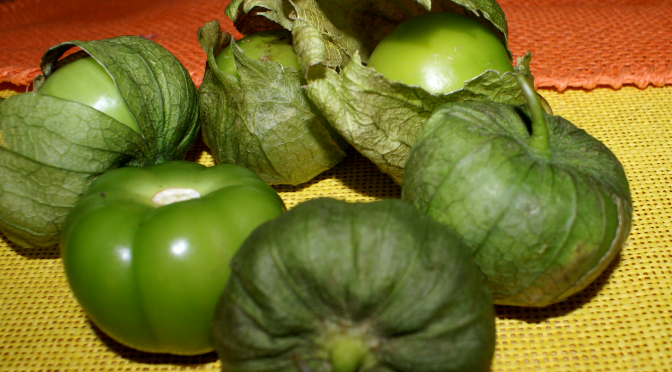
When is a tomato not a tomato? When it’s a tomatillo, of course. Adding to the confusion, you have this fruit/vegetable that looks like a small green tomato, tastes a bit like one, but isn’t really one, yet is called “little tomato” in Spanish. It actually does come from the same family as the tomato, but is a completely separate genus. Its closest relative may be the cape gooseberry. Isn’t the family of fruits and vegetables amazing? So many are related but not the same. Kind of like people, huh?

Tomatillos are also known as a husk tomato,  Mexican husk tomato or tomates verdes and are a part of the nightshade family. The flowers of the plant form a calyx, or paper husk, that surrounds the fruit while it is growing. When you buy them at the grocery, this husk is usually still on the fruit. While we generally see them when they are green, they may turn colors to yellow, red or even purple when fully ripened, depending on the variety of the plant.

Hailing from Mexico, the tomatillo is used quite often in Mexican cuisine and most of the recipes I’ve found that use it are in that category. It is a prime ingredient in one of my favorite Mexican dishes, Chile Verde, a spicy pork and chile stew. It is also used in Green Chile Salsa and in several other dishes. It has a tart taste as opposed to the sweet taste of tomatoes.

Nutrition information for 1 medium fruit (34 grams)
Calories: 11, Fat: 0 g, Net Carbs: 1 g, Protein: 0 g

Featured Recipe:

Being the adventurous sort in the kitchen, I wondered if tomatillos would be as tasty as green tomatoes in Fried Green Tomatoes, so I tried them. First, I will say that they get more tart as they cook, so there is a definite acidity to them. They benefit from a dipping sauce like Chipotle Ranch dressing or just some mayonnaise or Miracle Whip.  If you give them a try, let me know what you think.

While they are not too high in carbohydrates, keep the servings small, only two per serving.

fried-tomatillos-03950

Fried Tomatillos

Although not a tomato, a tomatillo is similar but smaller and does not turn red. This uses a basic batter recipe to cook the tomatillo as you would a green tomato.

1 Egg, beaten
1/4 cup Buttermilk
2 tablespoons Low Carb Flour (Almond flour)
2 tablespoons Cornmeal or Golden Flax
2 tablespoons Coconut Flour or Carbquick
1/2 teaspoon Salt
1/4 teaspoon Cayenne Pepper
2 tablespoons Parmesan Cheese
2 Tomatillos, cleaned and cut into 1/3 inch slices
Vegetable oil

Mix the egg and buttermilk together in a small bowl. Mix the 2 tablespoons of the low carb flour, corn or flax meal and seasonings together in a shallow pan or bowl. Put the Coconut flour in a small bowl. Pull a slice of tomatillo though the coconut flour to lightly coat, then dip in the egg mixture and shake off excess egg. Put in the cornmeal or flax mixture and gently press to coat the slice on both sides. Repeat with the rest of the tomatillo slices.

In a small skillet, pour enough oil to come about 1/4 inch up the pan and heat until about 375 degrees (F.) or very hot, reduce to medium high heat to prevent overheating. Drop just a tiny bit of the batter in to see how quickly it cooks. Carefully put in the tomatillo slices, two or three at a time and cook for about 2 minutes on each side or until golden brown.

Drain on a paper towel and sprinkle with a little seasoning salt, if you wish. A little tart, but delicious just as they are or dip in low carb Chipotle Ranch dressing.

Makes three servings

Nutrition Info per serving made with cornmeal
   Calories: 133.4 Fat: 6.8 g Net Carbs: 7.8 g Protein: 7.0 g

Made with flax meal and Almond Flour
   Calories: 122.5 Fat: 8.1 g Net Carbs: 3.4 g Protein: 7.4 g

Information for this article was pulled from Specialty ProduceNature’s Pride and Wikipedia

All photos by Rene Averett for Skinny Girl Bistro. Copyright 2015.

Simply Yummy Snow Peas

They have a nice snap and a sweet taste and make a wonderful addition to Chinese food, curries, and other vegetable combinations. Best of all, as far as peas go, they are reasonably low in carbohydrates. I most associate snow peas with Chinese food, but they can be used in any way you would use other peas. Experiment with them.

Although the snow pea originated in the Mediterranean region and were a popular variety of pea in the 19th century, they migrated to China where they quickly became the preferred pea and a key ingredient in Oriental cuisine. They thrive in a cool climate and should be picked five to seven days after flowering when they are at their peak flavor.

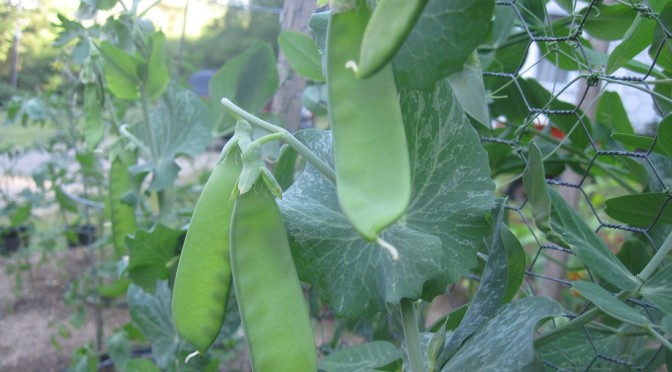
The French call the snow pea the mange-tout, meaning “eat it all” as it is one of only two pea varieties that you can eat the pod. The other pea with an edible pod is the sugar snap pea, although the snow pea has the more delicate pod. Easily recognized, snow peas have pale green pods that hold the small, flattened peas and are about two to three inches in length.

You can buy snow peas either fresh or frozen year round. Add them to stews in the winter or to salads in the summer. Delicious either way.

Nutrition information for 1 cup (98 g)
Calories: 41 Fat: 0 Net Carbs: 4 Protein: 3

Recipes:

Here’s a couple of recipes from Skinny Girl Bistro that feature snowpeas.

Cauliflower and Snow Peas Curry
Summer Harvest Cauli-risotto

Information for this article was taken from Specialty ProduceSelf Nutrition Data,  and Wikipedia.

Top photo is from Wikimedia, used with permission – By Rob Duval (Own work) [CC BY-SA 3.0

Rutabaga is a Delicious Root

Back quite a few years ago, PK and I put on a Scandinavian feast for the local SCA group. For the uninitiated, that’s the Society for Creative Anachronisms, a medieval recreation group. We tried to find recipes that would go back to the Middle Ages for the feast and it included many interesting and diverse foods from Scandinavia. One of the dishes we made was Lanttulaatikko, which is a rutabaga baked casserole from Finland. It was the first time I used rutabagas and I was pleasantly surprised by their taste. I have only used them rarely since then and now find myself wondering why? They are fairly low carb, although most of the carbs are sugar, and can be used in much the same way as a potato, so I plan to enjoy them more often in my cooking.

Rutabagas have a bit of a confused history, largely because of a mix of names used for them. They are only called rutabagas in the United States and possibly, Canada. Most of the rest of the world calls them swedes, reflecting back to their abundance in Sweden. The name itself is of Swedish origin, coming from rotabagge, meaning “round root”.

Other names for them are Swedish turnips and Russian turnips. In Ireland, they are the “neeps” in “tatties and neeps”, confusing matters further. I mentioned turnips to a friend who had lived in Ireland and she thought I was referring to a rutabaga. While they are believed to be a hybrid between a turnip and a wild cabbage, they have developed a different look and a different taste from a turnip. The vegetable is larger than a turnip with a purple to tan colored skin and the flesh is an orange color with a nutty, sweet taste when roasted. Turnips are white with a bit of purple on them, although some are all white and the flesh part is white and has a slight peppery taste. I’m sure that clears things right up.

Root Vegetables
Various root vegetables from the top left: turnip, rutabaga, daikon radish and the green one at the bottom is kohlrabi.

Rutabagas are a cold weather crop, like turnips, kohlrabi and others from the turnip family. They are primarily grown in the northern United States, Canada, Europe, and Great Britain.

Uses

Rutabagas can be cooked almost any way you cook a potato —  roasted, sautéed, baked, fried, boiled, mashed and added to soups and stews. They can be shredded and added raw to salads.  They make great French fries.

Fun Facts about the rutabaga

In 2011, the rutabaga entered the Guinness Book of World Records as the world’s largest vegetable when a gardener in the U.K. grew one that weighed 85.5 pounds! That is a big rutabaga!

People in the British Isles used to carve turnips and their larger cousins, the rutabaga into their equivalent of the pumpkin on Halloween. Called ‘tumshie heads” the children would carry them to ward off evil spirits. They have now been replaced for the most part with pumpkins.

The annual Rutabaga Curling Championship takes place annually at the Ithaca, New York, Farmers’ Market on the last day of the market season. They literally hurl or curl the rutabagas across the wooden floor.

Nutrition Information per 1 cup of cubed rutabaga (170 grams)
Calories: 66 Fat: 0 g Net Carbs: 12 g Protein: 2 g

Recipes

Here’s a couple of recipes from the Skinny Girl site that use rutabagas:

Corned Beef Hash with Eggs
Cove Soup

Featured Recipe for this blog:

Lanttulaatikko- Finnish Rutabaga Bake

I originally found this recipe in the Betty Crocker International Cookbook and have only made a couple of changes to it to convert it to low carb.

2 to 3 medium Rutabagas, peeled and diced (about 6 cups)
2 Tablespoons Butter, divided
1/2 cup Cream
1/4 cup Water
1/2 cup Low Carb Breadcrumbs
1 teaspoon Salt
1/2 teaspoon Nutmeg
2 Eggs, slightly beaten
2 tablespoons Sugar-Free Pancake Syrup
Cooking spray

Cover rutabaga cubes in water in a large saucepan. Bring to a boil, then reduce the heat and simmer until fork tender. This is about 20 to 30 minutes. Drain and put in your food processor to puree or use a hand masher. Set aside to cool a little.

Preheat oven to 350 degrees (F.) Spray a casserole dish with cooking spray.

Mix together two tablespoons of the butter, cream, syrup, salt, nutmeg, breadcrumbs and eggs until well mixed, then add to the mashed rutabagas. Pour into the prepared casserole dish. Dot the rest of the butter over the top.

Bake for 45 minutes or until the top is lightly browned.

Makes 8 servings

Nutirion Info per serving:
Calories: 146.1 Fat: 11.3g Net Carbs: 6.4 g Protein: 3.2 g

Information for this article came from Food Facts,  Vegetarian in ParadiseSpecialty Produce and Wikipedia.

Photo at the top from Wikimedia, used with permission – “Rutabaga, variety nadmorska” by Picasa user Seedambassadors

All other photos by Rene Averett; copyright Skinny Girl Bistro

Is Quince a Quasi-apple?

The only quince I knew when I was growing up was my Great Uncle Quince and I always thought it an unusual name.  For many years, I had no idea it was also a fruit. I didn’t actually try that fruit until about two years ago when I found some at one of the local grocery stores.  Although they look like an apple, they are not and you don’t eat them raw. They must be cooked. Once cooked, they taste similar to an apple and they pair very well with apples and pears. Even though they are related, the quince is the only one in its genus, which is Cydonia, although it is part of the Rosaceae family, along with apples and pears. So, related but not… does this make them like an in-law?

Like many fruits and vegetables, the quince has a long history that goes back to ancient Asia, Turkey, Iran and pretty much the rest of the Mediterranean. Although it likes the rocky slopes and woodland marshes of southwest Asia, do not confuse it with the Chinese Quince. The Akkadians called it supurgillu. The modern name came from 14th century France as a plural form of quoyn. The Greeks called it kydonion melon or kydonian apple.

It is possible that quince may have been cultivated before apples and it may be that many references translated to apple may actually have been quince. Customs surround the quince. Ancient Greeks used it a ritual offering at weddings because it had come from the Levant with Aphrodite and was sacred to her. The Greek bride would nibble on quince to perfume her breath prior to entering her bridal chamber. Paris awarded Aphrodite a quince and it was for a golden quince that Atalanta paused in her race. The Roman Apicius cookbook had recipes for stewing quince with honey and even combining them with leeks.

In the past, quince was once a staple in kitchens world-wide but now it is a novel fruit and is not seen too often. I can find it in the fall at one grocery store in Reno. There is a pineapple quince variety that grows in California, but the majority of them are imported from South America. Although interest has diminished in North America, it is still popular in many Latin American countries.

Uses

How is is used in different cultures? In many ways. In Moroccan, Persian, Romanian and Balkan cuisine, it is used as a confection. Quince can be added to meaty stews and in much the same way as apples or pears. Called melimelum by the Romans, the Greek name means “honey apple” because the fruit was preserved in honey for jam. The Portuguese called it marmelo, a name that combines melimelum and marmelado, which was a favorite confection. The British used it in tarts and pies.

With a high pectin content, quince is easy to turn into marmalade, conserves, jams or jelly. They can be poached, stewed, baked and pretty much treated as a cooked apple. You just can’t eat them raw. They should be cored and peeled before use. An easy way to peel them is to par boil them for about three minutes, then the skin slides right off.

Nutrition information for 1 fruit, peeled and cored
Calories: 52 Fat: 0.1 g Net Carbs: 9.7 g Protein: 0.4 g

Quince Apple Jam

Scone with Quince-Apple Jam. Photo by R. Averett

Adapted for low carb by Rene Averett

Easy to make and will only store a few weeks. Quince may be found in the fall and there are places where you can order it online.  If you make more than you can eat in two or three weeks, freeze part of the batch in a freezer bag and store for several months.

1 Quince
1 Cooking Apple
1 cup sugar substitute (xylitol, like Ideal sugar)
2 cups of water
1 Tbs lemon juice

Peel and grate, or finely chop, the apple and the quince.

Bring the water to a boil and add the grated or chopped fruit. Let them cook, stirring now and then, until they are soft, about 10 minutes. Add the sugar substitute and lemon juice, lower the cook temperature to medium and continue to cook until the sauce thickens to a jam. Let cool, then ladle into a clean jar and store in refrigerator.

Makes about 1 cup of jam. About 16 servings.

Nutrition info per tablespoon of jam (1 serving)
Calories:9.7 Fat: 0.0 Net Carbs: 2.6 g Protein: 0.1 g

Sources for information in this blog include Specialty Produce,
Wikipedia, Nature’s Pride and Nutrition and You

Photo at top from Wikimedia Commons, used with permission – “Quitte Cydonia oblonga” by Dietrich Krieger – Own work. Licensed under CC BY-SA 3.0 via Wikimedia Commons

Pursuing the Pasilla Pepper Confusion

My mother didn’t cook too often, usually stepping in to make something unusual or different from the standard fare that my grandmother served. Coming from a ranch family, my grandmother focused a lot on basic ranch food, meat and potatoes, chicken and hearty food. Mother liked to bake the unusual breads, the different cultural dishes. One of the things that she did every now and then was to make from-scratch enchilada sauce. I remember her coming home from a trip across the border with a bag filled with dried, very dark chiles. She pour boiling water over these and let them sit until they were soft, then put them through a sieve using a large pestle to mash them forcing out the chile juice and pulp that formed the base for the sauce. I believe that the chiles she used were Pasilla peppers.

When I began looking into the background of these peppers, I found there is a bit of confusion about what exactly a pasilla pepper is. Several sites that sell them and Wikipedia are adamant that pasilla, also called chile negro, are the dried chilaca pepper. This is a long, narrow pepper in the Capsicum annum family. It is very dark, almost a chocolate brown color when dried and I am pretty sure these are the chiles that my mother used for her sauce. Like many chiles, it ranges from mild to a middle of the range hot.

However, it seems the California camp has muddied the culinary waters a bit as grocers and cooks in California call the dried form of the poblano chile a pasilla also. This creates two lines of thinking in regards to what a true pasilla is. A couple of recipes I read even include the ancho chile as pasilla, when an ancho is actually the dried form of the poblano. It’s clear that cooks aren’t certain what pasilla is. The word pasilla, pronounced pa-see-ya, translates to “little raisin”, which more properly describes the dark brown chilaca when it is dried.

348px-Capsicum_annuum_ancho_dried
Ancho chile from the poblano pepper.  Photo from Wikimedia Commons, used with permission – “Capsicum annuum ancho dried” by User:Carstor – Own work. Licensed under CC BY-SA 2.5 via Wikimedia Commons –


220px-Capsicum_annuum_pasilla_dried
Pasilla peppers from the chilaca chile. Photo from Wikimedia Commons, used with permission. “Capsicum annuum pasilla dried” by User:Carstor – Own work. Licensed under CC BY-SA 2.5 via Wikimedia Commons –


For cooking purposes, any dried chile will work to make enchilada sauce. The different chiles used will alter the taste and hotness of the sauce. Commercial chili powder uses a variety of chiles, such as ancho, jalapeno, New Mexico Hatch and pasilla. The chili powder is also excellent in making Tex-Mex Chili or any other kinds of stew chilies. One famous chef uses chili powder as the base for his enchilada sauce, so it can be a simple process to make homemade sauce or you can start from the dried peppers. One thing is pretty certain, it will be thicker and more flavorful than any canned enchilada sauce you buy.

Nutrition Information per 1 oz (28 grams) of pasilla
Calories: 97 Fat: 4.0 g Net Carbs: 6.0 g Protein: 3.0 g

Keep in mind that once pressed to get the liquid and pulp out, the nutrition value may decrease somewhat, but for calculating the recipe, it’s best to count the number of peppers rather than the finished quantity of sauce to be on the safe side.

Recipes:

So far, I haven’t tried making homemade enchilada sauce, but with Cinco de Mayo just around the corner, I am thinking I will give it a try. At least, I’ll make  one beginning with chili powder or possibly one recipe that uses chipotle peppers, which you can buy canned in their sauce. So, I will refer you to a couple of recipes from other sites.

This recipe for Irma’s Red Enchilada Sauce starts with dried pasillas and dried Ancho or New Mexico chiles. If the pasillas are very crisp, they may already be roasted and you don’t need to roast them a second time.

Here’s a picture-by-picture recipe for Homemade sauce on Instructables using California or Hatch chiles.

And this is the Chipotle sauce recipe that is a little simpler.

Coming next month, I will put up a low carb recipe for enchiladas using low carb whole wheat tortillas instead of corn tortillas and homemade enchilada sauce in time for Cinco de Mayo! (That’s the 5th of May celebration for those not familiar with Mexican customs.)

All comments relevant to my posts are welcome. SPAM is not.  If the post has nothing to do with my site content, it will not be posted.

Information for this article came from Wikipedia, Eat More Chiles, and Spices Inc

Top photo of pasillas is from Wiki Commons, used with permission- “Fresh chilaca chilies” by Jonathanischoice – Photographed on my kitchen bench. Licensed under CC BY-SA 3.0 via Wikimedia Commons –